My Grandmother Refused to Manifest the House She Wanted. Then She Ended Up Owning the Entire Estate.
My grandfather thought they were discussing the purchase of a house. Grandma had already imagined three generations of our family living there, and she had no intention of reducing that life to whatever happened to be available.
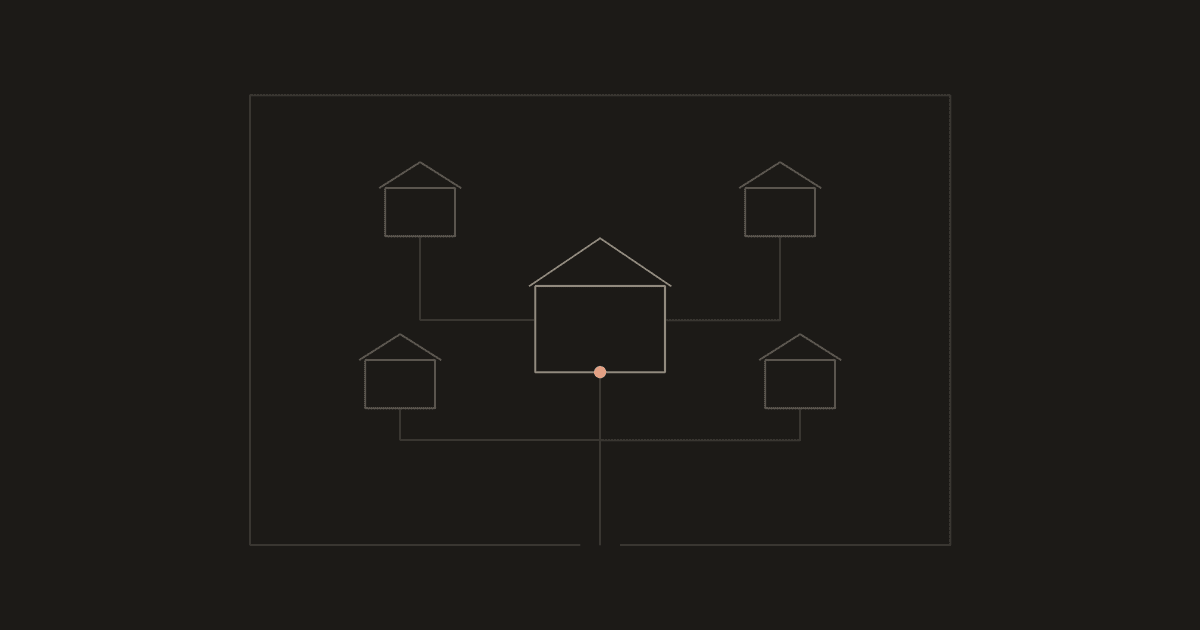
My grandfather thought they were discussing the purchase of a house. My grandmother, as it turned out, had already mentally moved three generations of our family into it. This difference in understanding explains most of what happened next.
The house was not for sale. Its owners had no interest in selling it, the surrounding properties were held under an arrangement that made a standalone purchase complicated, and Grandpa had already found several perfectly beautiful alternatives. He was trying to understand why his wife had become so attached to a property that was apparently unavailable when they had the means to buy somewhere else without making the process unnecessarily difficult.
Grandma thought he was asking the wrong question.
Years later, our family would own the central house, the surrounding residences, the grounds and the private roads connecting them. The property would become one of the places where I spent my childhood, where our family gathered for holidays, and where my grandparents would eventually become the kind of people who could spend an entire afternoon arguing about where somebody had planted a tree.
But at the beginning, Grandma wanted one house.
And nobody wanted to sell it to her.
The house she had already moved into
I need to describe the property properly because otherwise this story sounds like Grandma saw a mansion, wanted it, and eventually acquired something even more expensive. That interpretation misses almost everything that made the house important to her.
The estate was in an established part of the city, the kind of neighborhood where the houses had names and families were associated with particular properties for generations. There was a formal entrance, a long driveway lined with mature trees, several substantial residences, and grounds that made the place feel surprisingly removed from the city around it.
The central house was the oldest and most distinctive. It had wide verandas, a courtyard, a library, enormous windows and a dining room that could accommodate the kind of family gathering my grandmother considers a perfectly reasonable Tuesday.
It also had an inconvenient layout, several rooms that were difficult to keep cool, and a driveway that my grandfather would eventually complain about for years.
Grandma loved it.
When she first showed Grandpa the house, she was already describing where their children would stay when they visited, where the grandchildren would play, and how the dining room could accommodate everybody during holidays. She imagined her husband working in the library and relatives staying long enough that nobody had to organize every visit around a departure date.
Some of the grandchildren she was describing had not been born.
Grandpa listened to all of this and reasonably assumed that his wife wanted a large family home.
He wasn't wrong. He just hadn't understood the scale of what she was imagining.
At the time, the central house seemed to contain everything Grandma wanted. She could picture the life so clearly that the property felt familiar to her before she had any legitimate reason to consider it hers.
That familiarity was what made her interested in that particular house. She wasn't browsing expensive properties to see which one would impress people most. She had seen a place and recognized a life she wanted to live.
Unfortunately, recognizing a life you want does not automatically make its current owners interested in selling you their home.
Grandpa made the inquiries. The answer was no.
My grandfather approached the matter like a man who understood that property belongs to people and people are allowed to decline offers.
He made inquiries through the appropriate channels. The family who owned the central house had held it for a long time and had no intention of selling. The house also sat within a larger estate whose ownership and shared facilities made a separate transaction less straightforward than purchasing an ordinary standalone property.
There was no listing, no asking price and no indication that an offer would be welcomed.
Grandpa accepted the answer.
He began looking at other houses.
This is where my grandparents' different personalities became very obvious. Grandpa considered the original property an option that had been investigated and found unavailable. Grandma considered the inquiry a perfectly reasonable practical step that had produced information about the present owners' current intentions.
She didn't think the information required her to change her preference.
Grandpa found another house with better facilities. Grandma wasn't interested. He found one with more land. She didn't want to see it. He found a property in an equally prestigious area that could have been acquired with considerably less trouble, and she asked him what any of that had to do with the house she wanted.
He reminded her that they were trying to buy somewhere to live.
She agreed.
He reminded her that the owners had said no.
She agreed with that too.
I think people sometimes imagine my grandmother responding to circumstances with elaborate speeches about the power of consciousness. Most of the time, she is considerably more irritating than that. She simply understands the information and declines to draw the conclusion everybody expects her to draw.
Grandpa wanted to know whether she expected him to continue pursuing people who had already said they weren't selling.
She told him to leave them alone.
She wasn't asking him to pressure the family, manufacture a transaction or spend the next several years making unwanted offers. She understood that the property was theirs and that they were entitled to make their own decisions.
She also understood that she was entitled to know what she wanted.
Those two things could coexist.
Grandpa thought she might be trying to win
There is a part of this story that Grandma doesn't always include when she tells it, probably because it involves Grandpa making a very good point.
At some stage, he asked whether she still wanted the house or whether she had become interested in proving that she could get something she had been told she couldn't have.
He knew his wife well enough to ask.
Grandma was offended, which generally means a question has arrived somewhere interesting.
He explained that there were other properties capable of accommodating the life she had described. He wasn't asking her to settle for a smaller house or abandon the idea of a large family home. He wanted to know why this particular property had become nonnegotiable, especially after its owners had declined to sell.
Was she attached to the house, or was she attached to the satisfaction of watching the circumstance reverse?
I love this part because it complicates the version of Grandma people sometimes construct from her stories. She is not interested in defending every desire simply because she has expressed it. She is perfectly capable of examining whether an unwanted circumstance has changed the nature of what she wants.
She thought about Grandpa's question.
Would she still want the house if nobody ever knew it had once been unavailable? Would she want it if there were no dramatic phone call announcing that the owners had changed their minds? Would she be satisfied simply living there, without ever getting to tell the story of how she acquired it?
Yes.
She wanted the house when it was beautiful and available only in her imagination. She wanted it when Grandpa first made inquiries. She wanted it after the owners declined. She would still want it if the purchase eventually became so ordinary that nobody remembered it had ever been complicated.
The refusal had not created the desire.
That settled the question for her.
It did not settle the question for Grandpa, who still had no property to purchase.
The mistake she noticed in her own imagination
Grandma had been imagining the acquisition.
She pictured Grandpa telling her that the owners had agreed to sell. She imagined being handed the keys, signing the documents and walking through the front door knowing the house was finally hers.
There was nothing inherently wrong with those scenes. But after a while, she noticed that she kept returning to the same moment: the point at which something currently unavailable became available.
Every imagined scene was still organized around the problem of getting in.
This is a distinction she has made repeatedly throughout my life, and it took me years to appreciate how much it changes a manifestation practice.
You can imagine a fulfilled desire while remaining psychologically fascinated by its arrival. You can picture a wedding and still spend the entire scene feeling relieved that somebody finally chose you. You can imagine receiving money and remain absorbed in the fact that you used to lack it. You can picture moving into a house and spend the whole scene celebrating the fact that somebody finally agreed to sell it.
Chronologically, your imagination has moved forward. Emotionally, you may still be standing at the entrance.
Grandma noticed that she was doing this with the house.
She was repeatedly imagining the end of the negotiation instead of the life she had wanted the property for in the first place.
So she stopped imagining the purchase.
She began imagining ordinary days there, years after the acquisition would have become family history. The house had been theirs for so long that nobody discussed how they got it. The children knew where everything was kept. Family members had preferences about which rooms they stayed in. Grandpa had opinions about the grounds. There were familiar household inconveniences, annual gatherings and stories attached to particular parts of the property.
She wasn't trying to generate the excitement of ownership anymore. She was becoming familiar with the experience of already belonging there.
Something interesting happened as those scenes developed.
Her imagined life began extending beyond the central house.
She had been imagining more than one house without realizing it
Grandma would picture family members staying nearby, children moving between buildings, relatives having enough privacy to remain for weeks, and different generations occupying the same grounds without having to share every room.
Sometimes she imagined standing outside the central house and watching people walk toward the other residences. Sometimes she imagined discussing maintenance across the property. At other times, the house itself barely appeared because the scene concerned something happening elsewhere on the estate.
She hadn't sat down and announced that she was now manifesting every building.
She had simply stopped limiting her imagination to the transaction she originally thought would deliver the life she wanted.
This is the part I find most interesting in retrospect. Grandma was specific about the life she wanted, but she hadn't initially recognized that her description of it exceeded the boundaries of the property she was trying to buy.
She wanted a central family home, certainly. But she also wanted proximity without crowding, a place where children and grandchildren could return, and enough space for the family to grow without everybody eventually having to leave the property behind.
One house could accommodate some of that.
The estate could accommodate considerably more.
Grandma did not know at the time that the entire estate would eventually become available. She had no information suggesting such a transaction was likely, and she wasn't constructing an elaborate theory about how the current owners would be persuaded to sell.
She was imagining the life.
Grandpa, meanwhile, was still occasionally showing her alternative properties.
The opportunity arrived in a form Grandpa initially considered inconvenient
The ownership situation changed over time.
The family holding the estate began reconsidering how they wanted to manage it. Different members had different plans, maintaining the property required significant ongoing expenditure, and there was growing interest in releasing capital rather than continuing to hold several residences and shared grounds under the existing arrangement.
Eventually, a professional contact informed Grandpa that the family might be willing to consider a sale.
He assumed this was the opportunity they had been waiting for.
Then he learned that the central house was unlikely to be offered separately.
The owners were considering disposing of the estate as a whole. A single transaction would be more straightforward for them than dividing the residences, access arrangements and shared grounds among different purchasers.
From Grandpa's perspective, the opportunity had become unnecessarily complicated.
He had originally been investigating one house. Now the proposed acquisition involved several properties, a much larger financial commitment, additional legal work and ongoing responsibilities that would extend well beyond maintaining a family residence.
He told Grandma that the house might finally be available, but there was a problem.
She asked him to explain the problem.
He explained that they would probably have to buy the entire estate.
Grandma asked him to explain why that was a problem.
I wish I could have witnessed this conversation.
“Why are you still talking about one house?”
Grandpa's objections were reasonable.
The transaction was larger than the one they had originally contemplated. The ownership structure needed careful review. There were questions about the separate residences, shared infrastructure, access, maintenance and how the estate should be held if they acquired it.
He was not going to buy several substantial properties simply because his wife had become fond of one of them.
Grandma understood all of that. She wasn't asking him to skip due diligence or sign whatever documents somebody placed in front of him.
What she wanted to understand was why he continued treating the central house as the outer boundary of their desire.
He reminded her that the house was what she had originally asked for.
She reminded him of the life she had described.
The family gatherings, the children, the grandchildren, the relatives staying for long periods, the possibility of different generations remaining close while maintaining their own homes. She had been describing those things from the beginning, long before the estate was offered as a single acquisition.
Grandpa had understood them as reasons she wanted a large house.
Grandma had eventually begun understanding them as the life she wanted, regardless of the particular transaction required to accommodate it.
The estate wasn't an unrelated upgrade. It contained the original house and allowed for more of the life she had already been imagining.
I think this is where the story becomes much more interesting than the usual lesson about manifesting something bigger.
Grandma had not decided that the original house was too small a desire. She hadn't become dissatisfied with it, and she hadn't started chasing a more expensive outcome to prove that she was capable of more.
She recognized that the arrangement now being offered included what she wanted and accommodated aspects of the desire she had previously imagined without understanding how they would fit into the property.
Grandpa began looking at the transaction differently.
He still wanted the numbers.
Grandma still wanted the estate.
Their marriage has survived many conversations of this kind.
The documents did not sign themselves
Grandpa insists on this part whenever the story comes up.
The estate did not simply materialize in the family's name because Grandma had imagined grandchildren running through the grounds.
There were negotiations. The owners needed to agree on the proposed sale. Lawyers examined the ownership arrangements and the obligations attached to the property. Financial advisers reviewed the acquisition, and Grandpa had to consider how the estate would be managed over the long term.
There were questions about access, maintenance, individual residences and shared facilities. There were also moments when the transaction appeared less straightforward than it had initially seemed.
One issue concerning the estate's existing arrangements took longer to resolve than expected. Grandpa considered whether the complications justified walking away.
Grandma listened to his explanation and asked whether the issue was genuinely incapable of resolution or whether it was simply unresolved at that moment.
He told her there was a difference between being confident and being reckless.
She agreed, then asked him to continue doing his job.
This is one of the things I appreciate about how my grandparents practiced the Law together. Grandpa did not have to pretend practical details were irrelevant, and Grandma did not have to interpret every practical complication as a verdict on the desired outcome.
They could take the transaction seriously without allowing every development to reopen the question of whether the estate was what they wanted.
Eventually, the necessary agreements were reached and the purchase proceeded.
The family acquired the central house and the surrounding estate through the appropriate legal arrangements.
Grandpa remembers the transaction as a complicated acquisition that became possible because the owners' circumstances changed and both sides ultimately agreed to terms.
Grandma remembers it as the estate becoming theirs.
They have been married long enough to let each other tell the story.
The first gathering after the purchase
If this were a typical manifestation success story, I would probably make the signing ceremony the emotional climax.
I would describe the documents, the keys, Grandma walking through the front door and the moment she finally understood that the house belonged to her.
She remembers those things, of course.
But the moment she talks about most often happened later.
The family had gathered on the property. Some people were in the central house, others were staying in the surrounding residences, and children were moving between the buildings. Grandpa was occupied with something practical. There were relatives arriving, people asking where everybody else had gone, and the usual small disagreements that occur whenever my family tries to organize a large gathering.
Grandma was sitting outside when she noticed how ordinary everything felt.
Nobody was discussing the original owners' refusal. Nobody was waiting for permission to enter the property. Nobody was celebrating the fact that the house had once been unavailable.
The estate had become a place where the family lived and gathered.
The house was no longer arriving.
It had a history.
That was when Grandma recognized how closely the day resembled the life she had spent years imagining. The resemblance wasn't confined to the architecture. It was in the way people moved through the property, the familiarity of the arrangements and the complete absence of ceremony around the fact that the family belonged there.
The original purchase had become one relatively uninteresting chapter in a much larger story.
And that, according to Grandma, was what she had wanted all along.
Grandma doesn't think the lesson is to manifest something bigger
People hear this story and immediately want to turn it into a rule about scale.
If you want a house, manifest an estate. If you want a certain amount of money, double it. If you want a particular opportunity, demand a more prestigious one. Why settle for the original desire when you could have something bigger?
Grandma finds this interpretation almost as irritating as being told to make a desire smaller because it appears difficult.
She didn't acquire the estate because a larger property would make her manifestation more impressive. She acquired it because the arrangement suited the life she wanted.
If one house had contained that life, she would have been delighted with one house.
The value of the estate wasn't simply its size, price or social significance. It was what the family could do with it.
This matters because manifestation content can quietly turn expansion into another obligation. People begin feeling that wanting something ordinary demonstrates a limited imagination, or that accepting the exact thing they originally wanted somehow means they failed to think big enough.
Grandma has never understood desire that way.
She thinks people should be allowed to want what they want without having to defend the scale of it in either direction.
The problem she noticed in her own manifestation was more specific: she had initially mistaken one possible acquisition for the complete form of the life she wanted. Once she stopped organizing her imagination around the purchase, she became less attached to the transaction she had originally expected.
That left room for an arrangement she hadn't known was available.
The route can become more important than the desire
This is the part of the story I return to most often.
Grandma wanted a particular house. At first, she imagined the owners agreeing to sell it. That was a perfectly understandable route, but it was still a route.
When the owners declined, she could have made their decision the central problem of her manifestation. She could have spent years imagining them changing their minds, rehearsing the phone call in which Grandpa announced that they were finally willing to sell, or trying to determine which circumstances would need to change before the purchase became possible.
Instead, she gradually became less interested in witnessing the acquisition and more interested in inhabiting the life that would follow it.
The eventual transaction looked very different from the one Grandpa had originally investigated.
This is why I think the story applies far beyond property.
Someone can want a particular career and become fixated on the exact application that must succeed. Someone can want financial independence and decide it must arrive through one income source. Someone can want a relationship and spend so much time imagining the message that begins it that the actual relationship becomes secondary.
The route becomes familiar, then necessary, then almost indistinguishable from the desire.
Grandma's experience taught her to be much more careful about that progression.
Specificity is not the problem. She was extraordinarily specific about the house. She knew what it looked like, where it was and how she wanted to live there.
The problem arises when you decide that the only route you currently understand must be the route through which the desire becomes yours.
Grandma never needed to know that the estate would eventually be offered as a whole in order to imagine living there.
She certainly didn't need to arrange the owners' lives around making it happen.
She had a preference, and she allowed the practical route to remain something she did not yet fully understand.
Grandpa has a different lesson
Grandpa thinks people occasionally tell this story in a way that makes the acquisition sound more straightforward than it was.
He is correct.
The estate came with responsibilities. The larger purchase required more work, more management and more long-term planning than acquiring the central house alone would have required. There were maintenance obligations, decisions about the surrounding residences and practical considerations that continued long after the transaction was complete.
He doesn't think people should hear the story and conclude that a larger manifestation is automatically a better one.
In his view, the important question is whether the outcome actually accommodates the life you want and whether you are prepared to take responsibility for what comes with it.
Grandma agrees with him about the responsibilities. She simply doesn't believe those responsibilities are a reason to reduce a desire before understanding whether you genuinely want the life attached to it.
Their disagreement is mostly about when practical information should influence the decision.
Grandpa wants to understand what an acquisition involves before becoming attached to it. Grandma is comfortable choosing the life first and examining the practical arrangements as they become relevant.
Both perspectives shaped the way our family approached the estate.
Grandma's imagination made room for a possibility Grandpa had initially dismissed as unnecessarily large. Grandpa's practical judgment helped turn that possibility into a sustainable family property.
I think the story becomes less interesting when either of them is removed from it.
The estate I grew up knowing
By the time I was old enough to understand the story, the estate had already become ordinary family history.
I knew which rooms were cold in the mornings, which parts of the grounds became unpleasant after heavy rain, and which house Grandma preferred everybody to gather in. I knew that Grandpa had opinions about the maintenance of the property and that Grandma had opinions about Grandpa's opinions.
I knew the shortcuts between the buildings. I knew where family members liked to sit. I knew which relatives preferred staying in which residence and which gatherings were likely to become much larger than originally planned.
I did not grow up thinking about the family who had once owned the estate.
I did not walk through the central house wondering how Grandma had persuaded reality to make it hers.
It was simply somewhere our family belonged.
Only later did I learn that Grandma had once wanted one house on the grounds, that its owners had declined to sell, and that Grandpa had spent a considerable amount of time trying to persuade her to look at perfectly good alternatives.
I remember finding the story funny because the idea of Grandma living somewhere else seemed almost as strange to me as the idea of somebody telling her she couldn't have the house.
That is one of the peculiar things about growing up around manifestations that happened before you were born. You encounter the result before you encounter the desire. What somebody once imagined becomes the environment in which you learn what ordinary life looks like.
For Grandma, the estate began as a preference she was unwilling to reduce to the opportunities immediately available. For Grandpa, it became a complicated but worthwhile acquisition. For me, it was a place where I spent my childhood, long before I understood that either of them had ever considered living somewhere else.
I think about that whenever people become intensely preoccupied with the moment their manifestation will arrive. They imagine the notification, the phone call, the agreement, the keys or the first day, and they make that moment carry the emotional weight of the entire desire.
Grandma certainly enjoyed receiving the keys. But she had wanted a life that would continue long after everybody stopped talking about them.
She got the house she wanted, and the estate became part of our family's history. The children she once imagined running through the grounds eventually grew up knowing them as familiar territory. The grandchildren she pictured before some of us existed came to associate the property with holidays, family arguments, ordinary afternoons and the particular feeling of arriving somewhere you have belonged for as long as you can remember.
That is the part of the manifestation I find most extraordinary.
Grandma wanted a life there, and by the time I came along, the story of how she acquired it had already become old news.
The Family Archive presents fictional family stories and Law of Assumption as personal philosophy and entertainment. The interpretations expressed in this article are not guarantees of particular outcomes or substitutes for legal, financial or other professional advice.
From the archive
My Mother Says She Manifested Me Back From the Dead. I’m the Son She’s Talking About.
My mother says she refused to accept my death and brought me back. I’m the son from that story, and I’ve spent decades being careful with a sentence she says without any hesitation at all.
By Dad
Sep 18, 2026 · 18 min read
My Grandmother Says She Brought My Dad Back to Life
My grandmother says a hospital declared my father dead, and that her refusal to accept it is the reason he is alive. This is the story I have avoided telling publicly, and the one I trust least to be repeated carelessly.
By The Editor
Sep 16, 2026 · 16 min read